After leaving Narita, I made my way toward Funabashi, where I had booked a capsule hotel. At least, that’s what I thought. When I arrived at Funabashi Station, I realized I had the right capsule hotel company — just the wrong location. My reservation was actually at Nishi-Funabashi, not Funabashi Station.
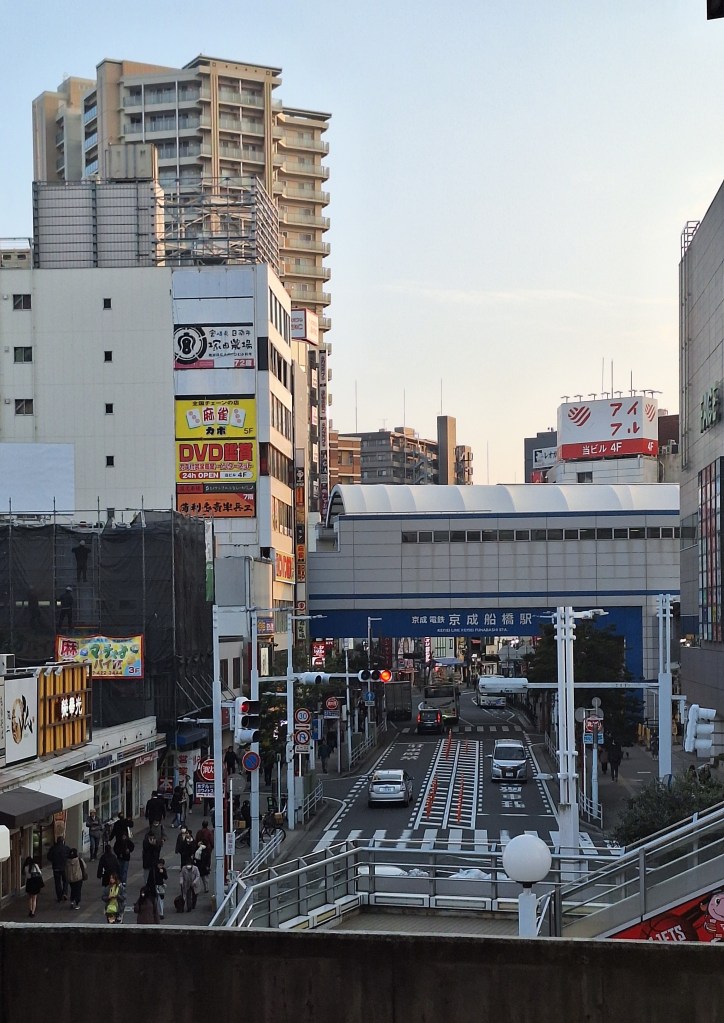
It felt like a silly mistake at first, but it ended up being one of those travel missteps that turns into a blessing. Nishi-Funabashi had a quieter, more residential feel. It was calmer, less hectic, and surprisingly full of great food options. Japan builds much of its life around train stations, so anywhere there’s a station, there’s a cluster of restaurants, cafés, convenience stores, and little surprises tucked into side streets. I dropped my bags and just started wandering.

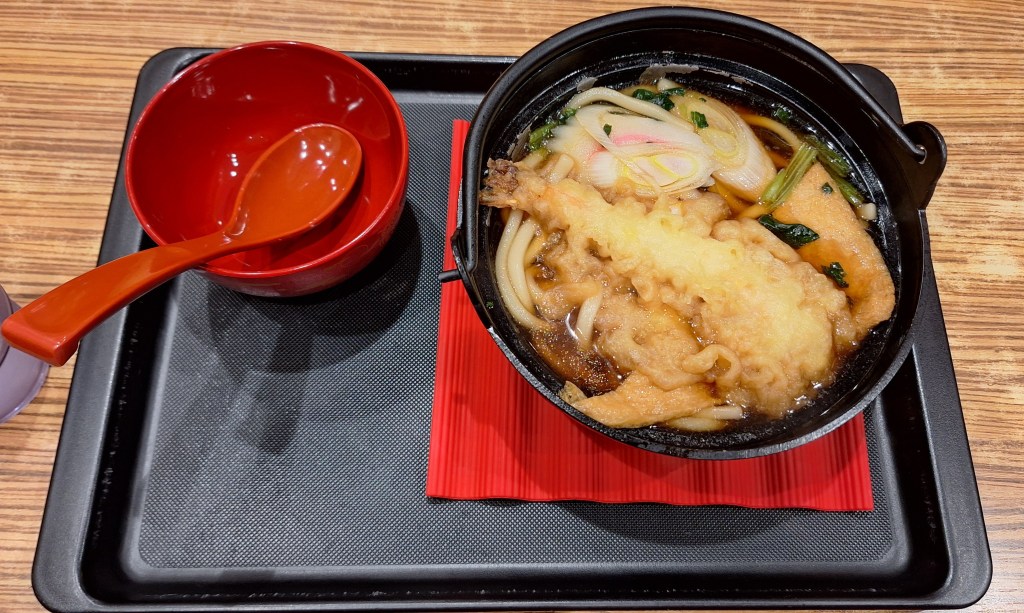
One thing I loved right away was how I allowed myself to play with the day. I didn’t force myself into a schedule or obsess over what I “should” be doing. I just explored and let whatever came my way unfold naturally. That mindset took me to a nearby neighbourhood called Shin-Koiwa (新小岩), where I found some great local restaurants. That’s where I tried Fuji Soba, a chain I’d seen before but never entered. Their udon blew me away — especially the Nabeyaki Udon, served piping hot in its own little pot. I even broke down the name while I ate: nabe (pot), yaki (cooked), udon (thick noodles). Simple, comforting, and surprisingly educational.
Mornings in Nishi-Funabashi became something of a ritual for me. I’d walk around the station, watching the flow of commuters heading off to work. One thing I noticed immediately was how people wear their backpacks on the front while riding trains. It’s a small courtesy, but one that says so much about the culture here. The more I observed, the more I saw how Japan functions on this deeply ingrained collective mindset. Everyone understands their small role in a much larger structure, and they take pride in performing it well. Train cleaners moving with precision, conductors carrying themselves with ceremony — each person doing their part with care, discipline, and a desire to contribute to the whole.
One of the biggest highlights of my time here was visiting my first onsen. I found it while wandering around Funabashi — a traditional Japanese bathhouse where everyone is completely nude. Coming from the West, it felt unusual for about two minutes, and then it became the most natural, relaxing thing in the world. Before entering any bath, you sit down and wash yourself thoroughly, which feels like a cleansing ritual.
I also learned you’re supposed to bring your own towel, which I definitely did not do the first time. So after soaking, I just sat in the sauna and let the heat slowly dry me off. Honestly? It worked out perfectly.
Since I couldn’t read Japanese, I didn’t understand any signs, so I examined the rocks to figure out what kind of bath I was stepping into. Some tubs had corroded stones — acidic water. Others had rocks coated with salt — salty baths. My favourite was the Shigaraki yaki clay pot bath, followed closely by the carbon dioxide bath that covered your skin in tiny bubbles. There was also a cold spring-water bath outside, and I happened to be soaking in it during sunset. Steam rising from the other pools and the sky glowing orange — it felt like time slowed down just for that moment.
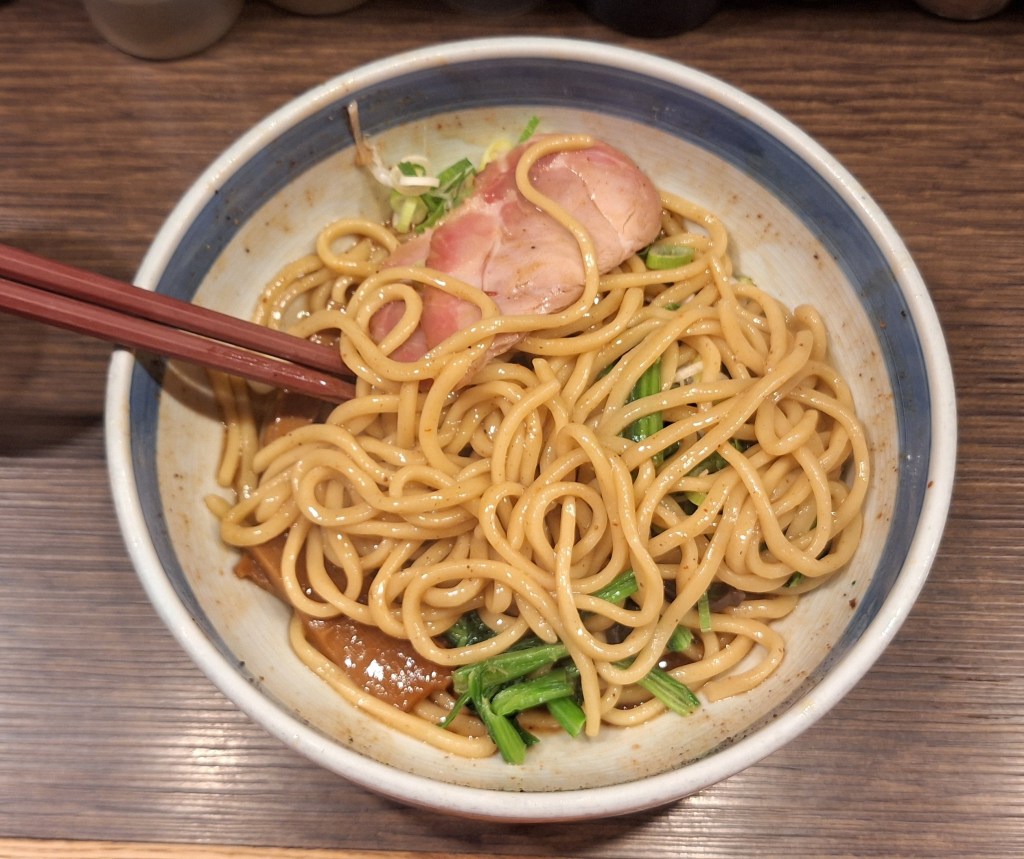
I stayed in Nishi-Funabashi for about three days and fell into a nice rhythm. My favourite onsen was Hōten-no-Yu, a beautiful mix of indoor and outdoor baths. I explored the maze-like aisles of Don Quijote, Japan’s massive mega-store that sells literally everything. And at Funabashi Station, I found one of Japan’s greatest culinary secrets: the cramped little ramen shops where the seats are packed close together, the chefs behind the counter have years of experience, and the food tastes absolutely incredible.
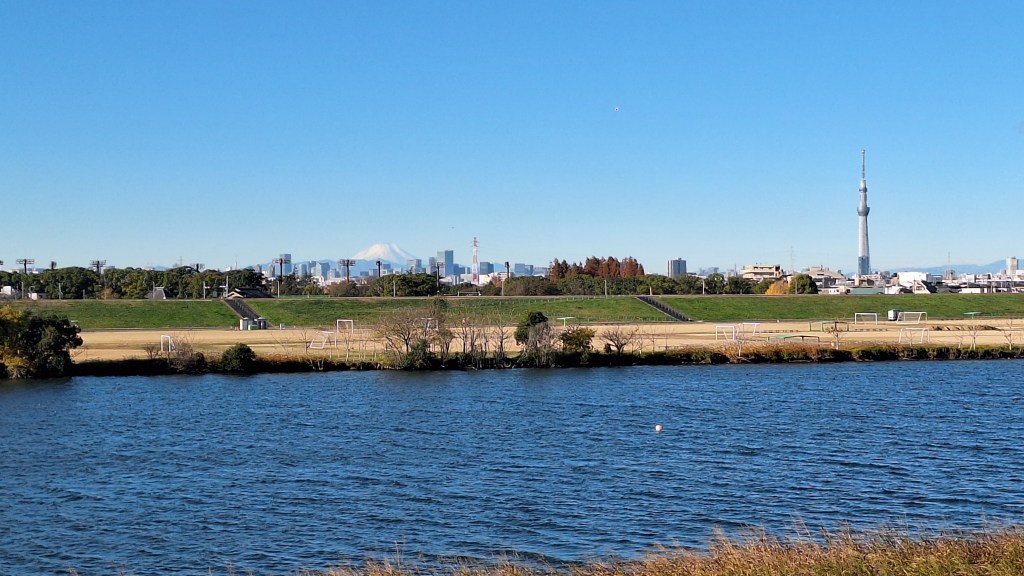
I also tried red bean takoyaki for dessert — surprisingly delicious — and took slow walks along the Edo River, watching the water drift by while the noise of the city faded behind me.
Those few days weren’t planned out or full of big attractions. But they grounded me. They eased me into the pace of Japan — the food, the trains, the rituals, the small daily moments. By the time I checked out of the capsule hotel and headed toward Nikko, I felt ready, settled, and excited for the next chapter of the journey.
 Curious Travels
Leave a comment