Ontario is my home, and in the summer it is incredibly beautiful. I feel lucky to live near a conservation area, with easy access to forests, meadows, and trails. No matter how many times I visit, I always find myself in awe of the diversity and quiet beauty of nature. Over the last few days, I set out on some adventurous walks, and here are a few things I encountered along the way.
A Curious Woodland Berry
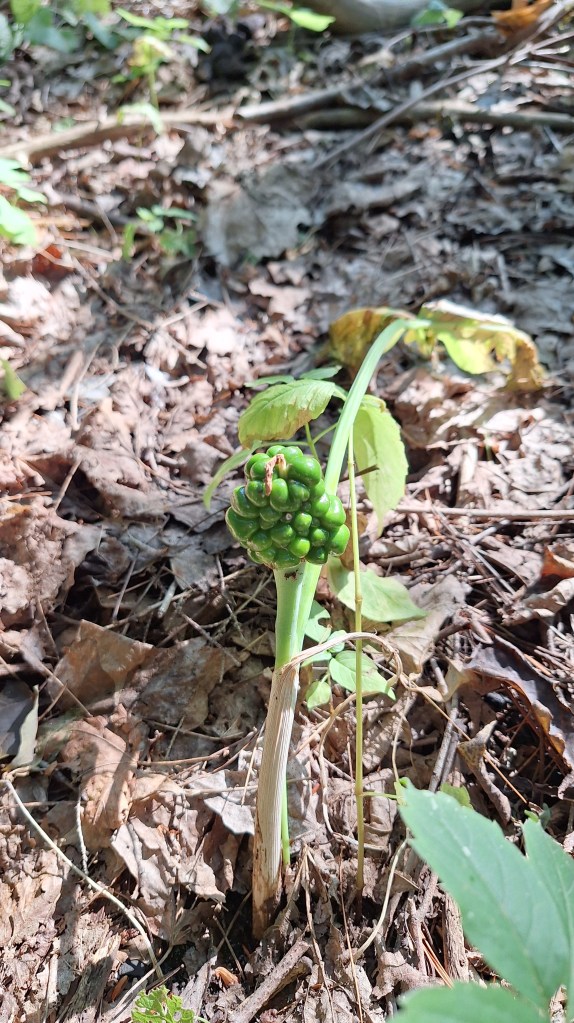
On one trail, I came across a cluster of unusual green berries. At first glance, they looked almost alien, but this plant is likely a Jack-in-the-pulpit, a native woodland species found throughout eastern North America.
Earlier in the season, Jack-in-the-pulpit is known for its striking hooded leaves and spadix (the “Jack” sitting in the pulpit). By mid-to-late summer, the plant puts its energy into producing fruit—tight clusters of green berries that eventually ripen into a brilliant scarlet red by early fall. I found this one growing in the shaded, damp soil of a meadow in the conservation area. Its leaves were beginning to yellow and wilt, but the vibrant berry cluster stood out like a beacon against the green forest floor.
A Walnut Tree with a Copper Glow
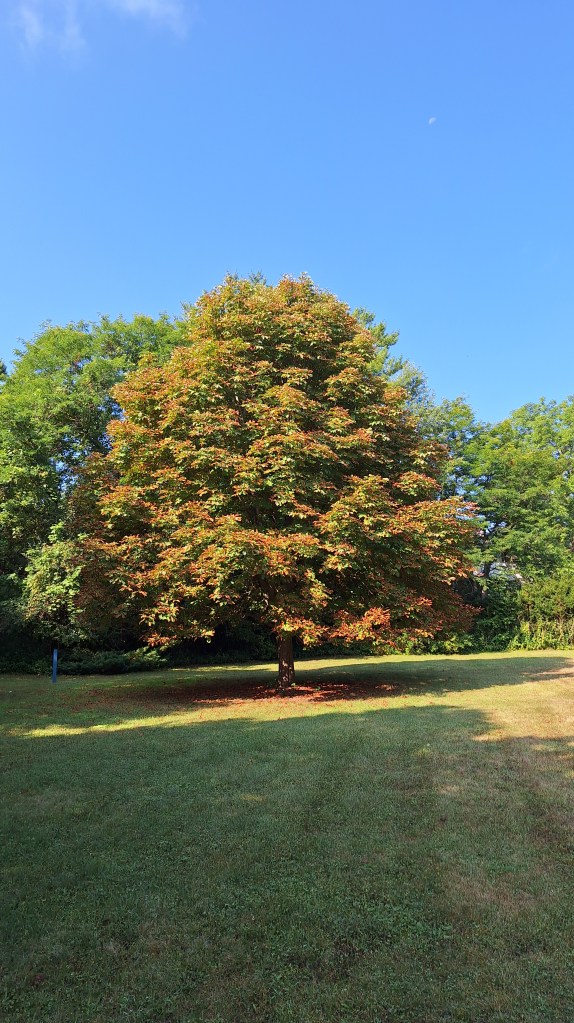
Not far from the meadow, I noticed a Black Walnut tree (Juglans nigra) shimmering with a surprising copper hue. Black walnut trees are common in Ontario, easily recognized by their tall, spreading crowns, ridged bark, and large compound leaves. They are valued both for their edible walnuts and for their strong, dark wood, which has been prized in furniture making for centuries.
The tree I saw, however, had leaves that weren’t their usual deep green. Instead, they glowed with coppery, bronze tones. This unusual coloring was the result of Walnut Anthracnose, a fungal infection that thrives in humid, late-summer conditions. The fungus breaks down the chlorophyll in the leaves, revealing yellow and rust-colored pigments beneath—much like the early onset of autumn.
From a distance, the tree looked like it was aflame, glowing warmly against the backdrop of green forest. While walnut anthracnose rarely kills mature trees, it can cause leaves to drop early and weaken the tree over time. So even as this tree was fighting a fungal infection, its shimmering copper glow made it more inviting than usual.
A Tiny Master of Disguise
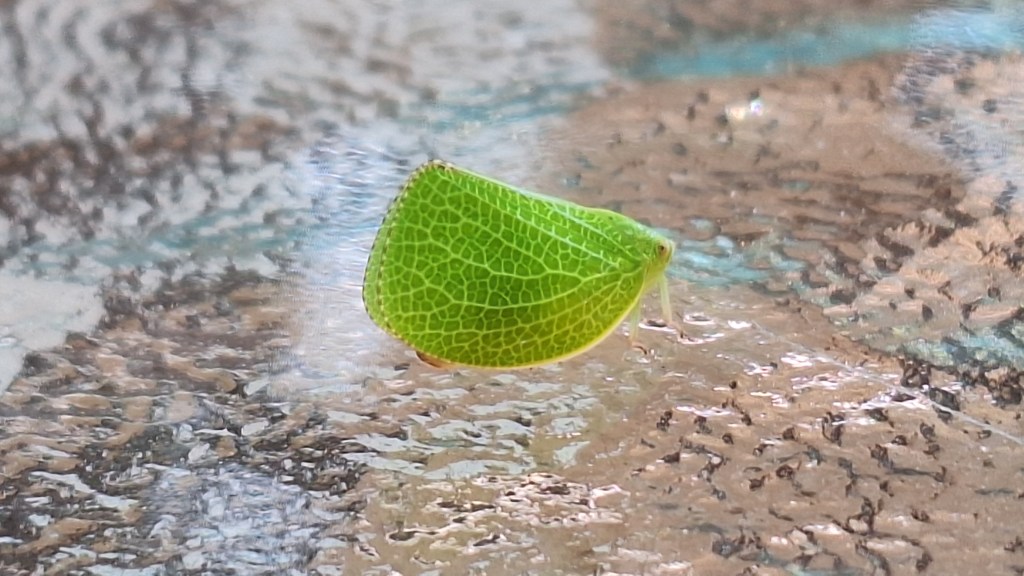
I spotted a small, almost invisible insect perched on a leaf. This was a Leafhopper, part of the Cicadellidae family, and likely a Buffalo Treehopper or a close relative.
Leafhoppers are tiny—usually less than a centimeter long—but they’ve evolved remarkable camouflage. Their bodies are shaped and colored to resemble leaves, complete with delicate vein-like patterns. This mimicry makes them nearly invisible when they rest on plants.
- Camouflage: By looking like part of the leaf or stem, they can avoid being spotted by birds and other predators.
- Diet: They feed by piercing stems and sipping sap with their straw-like mouthparts.
- Behavior: True to their name, they can hop quickly if disturbed.
Although they rarely cause serious harm, in large numbers they can weaken plants by feeding on them. In Ontario, they are common throughout the summer and fall, hidden in plain sight among the greenery.
Closing Thoughts
Exploring my local conservation area reminds me that you don’t need to travel far to discover something new. Whether it’s a native woodland plant, a copper-glowing walnut tree, or a tiny insect master of disguise, Ontario is full of natural wonders waiting to be noticed.
Every walk feels different, and every small detail—from the shimmer of leaves to the sudden hop of an insect—tells a story about the rich ecosystems thriving here at home.
 Curious Travels
Leave a comment